
KreedOn's June 2025 explainer sat in a familiar corner of the fantasy reading: an IPL-season strategy piece that promised to show how analytics can turn a casual selection into a competitive one. A year on, the article is still worth reading as a primer on what data can and cannot do for a fantasy team. Most of its concrete claims — captain and vice-captain multipliers, pitch-led selection, transfer discipline — have aged into the routine vocabulary of the contest. A few have not. The interesting question is which is which.
The article defined fantasy cricket IPL as an online game where fans build a virtual team of real IPL players inside a set budget, picking from batters, bowlers, all-rounders and wicket-keepers. That frame is still accurate. Salary-cap fantasy on Dream11-style platforms has not changed its basic shape in the year since: pick eleven within a credit ceiling, name a captain and a vice-captain, lock the team before the first ball. The rules that move captain selection — captain points doubled, vice-captain points lifted by 1.5 — were already standard in 2025 and remain the multiplier most teams fight over.
What changed in the intervening contests is the cost of getting those rules wrong. Captain and vice-captain picks now carry even more weight in published leaderboard runs because the public shortlists have tightened. The names that finish in the top one percent of large contests are no longer the loudest batters in the preferred jersey. They are quietly chosen all-rounders whose second skill did most of the work on a night when the headline batter fell early.
The five categories of analytics the playbook named
The KreedOn piece sorted the analytical work into five buckets: player selection, pitch and venue analysis, team form, real-time injury monitoring, and transfer management. A year later, that taxonomy is still useful as a checklist for the lock-time routine. Two of the buckets — pitch and venue analysis, transfer management — have gained weight. The other three have stayed roughly where they were, with one quiet caveat on injury monitoring that the original did not flag.
Pitch and venue reading in 2025 was already a serious input to selection. Mullanpur Stadium was cited in the original as a useful example: a venue that has produced both high and low-scoring games, where seamers got early help and spinners came into play later in the match. Across the last year of IPL fixtures, that pattern has hardened rather than softened. Two-phase surfaces — early lateral movement, middle-over grip — are now the default reading for the venues the league visits in the back half of the season. A fantasy team built only for a flat batting deck loses more often than it did a year ago.
Transfer management has also risen up the priority list. The original piece warned against overusing transfers early in a multi-game series, which was sensible advice then and is even more sensible now. Series-length fantasy formats have grown more common on the major platforms, and the cost of a panicked transfer late in the round has gone up because the credit of the player you bring in rarely matches the credit of the player you drop.
What aged well
Player selection by role, pitch-led adjustments and the discipline to keep captain picks inside the sheet that names both a batting number and a bowling share — these have all held. The piece's treatment of role-specific data points is the part that has survived a year of new fixtures without revision.
For openers, the relevant data point was powerplay strike rate, not overall average. For death bowlers, the relevant window was wickets in the last three matches rather than career numbers. For all-rounders, both batting and bowling stats were needed in the same row. For wicket-keepers, dismissals plus batting order were the inputs that mattered. None of that has changed in a year. The data behind each input has refreshed, but the categories themselves have not moved.
What has aged less well
Real-time injury monitoring was framed in the original as a steady-state feed. In practice, the feed has become noisier, not quieter. Late-session fitness updates, optional nets sessions, social-media hints from support staff and unofficial press conference snippets all push conflicting signals into the hour before lock. The advice in the original — pay attention to injury news — remains correct. The execution has become harder, and a fantasy reader in 2026 needs a tighter filter on which injury signals to act on and which to ignore until the playing XI is confirmed.
Team form has held at a lower signal-to-noise ratio than the original implied. A team in form often loses the next match on a two-phase surface. A team out of form can win a single game on a flat batting deck against a tired attack. Form is a useful tiebreaker. It is not the load-bearing argument the original sometimes treated it as.
Pitch reading, a year later
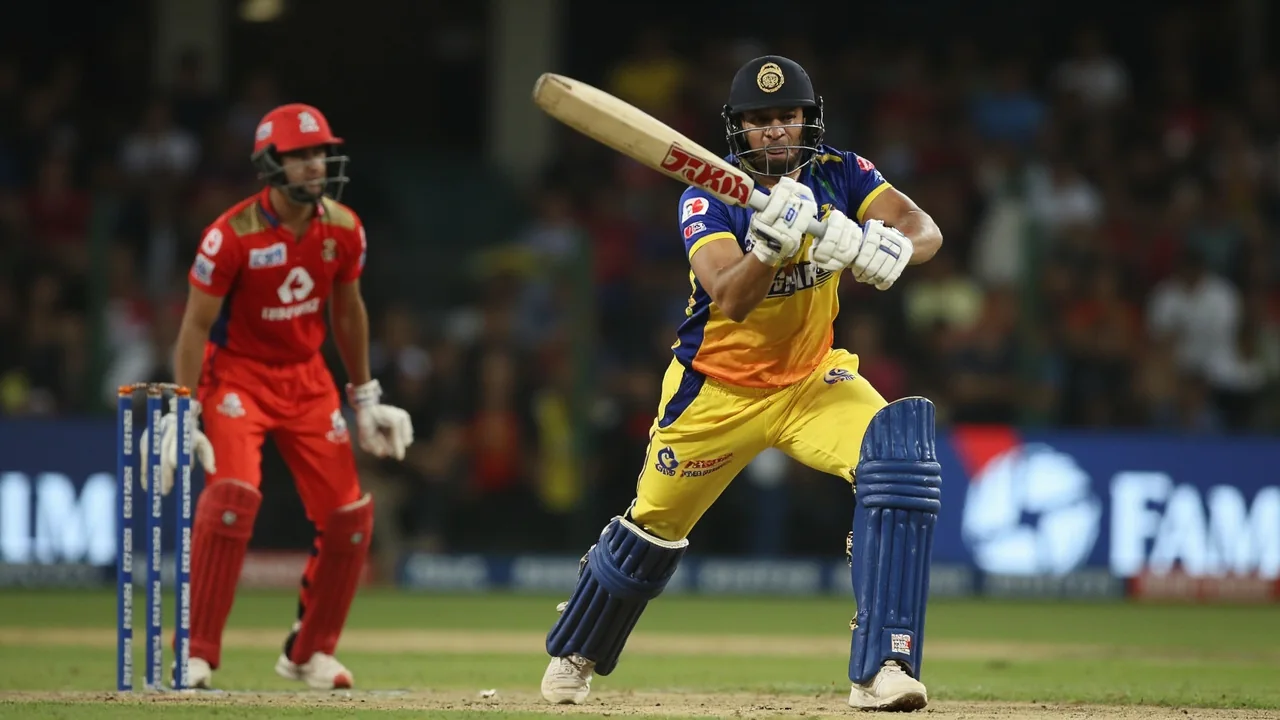
Pitch reports in 2025 were treated as background detail in many fantasy guides. In 2026 they are closer to load-bearing. A surface that favours batters is read differently from a surface that helps seamers up front and turns square in the middle. A pitch that holds slow in the second innings inverts the value of finishers, all-rounders and pinch-hitters.
Weather reads have grown alongside pitch reads. Moisture on the ball and dew factor into selection because they change which side of the innings benefits from batting first. A bowler-friendly first innings with a dew-heavy second is a different contest from a dry, flat day game. The original piece named moisture and dew as selection inputs. A year later, those inputs sit alongside pitch type and match length on every serious fantasy shortlist.
The venue conversation has also widened. Mullanpur's two-phase pattern is no longer the only reference. The IPL's calendar now reads multiple venues with distinct personalities across a season, and a fantasy reader who treats all home grounds as interchangeable loses ground quickly. The checklist is the same as it was in 2025: surface type, expected pace off the pitch, expected grip for spin, dew forecast, and a short note on whether the venue has historically defended or chased well.
Selection mistakes the original flagged, and which ones still cost
The playbook named four common mistakes: picking players only because they are famous, ignoring whether they are in the playing XI, overusing transfers early, and not tracking injuries or pitch data. None of those mistakes have gone away. Two of them have become more expensive in absolute terms because captain and vice-captain multipliers compound them.
Picking a famous batter who is not in the playing XI returns zero points and burns the captain multiplier on a player who never took the field. That mistake was always costly; it is now compounded because public captaincy pools have narrowed around confirmed-XI regulars. The safe captain pick has become safer; the famous-but-absent captain pick has become more punishing.
Ignoring pitch data was treated as a tiebreaker in 2025. It is now a tiebreaker that decides captain and vice-captain selections in close contests. A fantasy team that ignores a two-phase pitch and stacks three top-order batters from one side will lose more often on a surface that asks for bowling all-rounders. The data was always there. The discipline to act on it has become more valuable.
Overusing transfers early remains a slow-burn mistake. It looks harmless in the first two games of a series because the team is still scoring points. By the third or fourth game, the credit ceiling is misaligned and the captain choice has been forced onto a less-favoured player. The original advice — preserve transfers, plan them, do not panic-swap after a single bad game — has held up exactly because the cost compounds across a series rather than spiking on one bad night.
What the analytics still cannot do
A year of additional fixtures has not changed what data cannot predict. It cannot tell you which batter will lose his off-stump to the first ball of a powerplay. It cannot tell you whether a team will bat first after winning a toss on a wet outfield. It cannot tell you which all-rounder will be held back from the bowling attack because the captain prefers a specialist match-up.
The honest framing — and the framing the original playbook kept returning to — is that data narrows the shortlist, the captain pool and the transfer decision. It does not decide contests. The narrow edge between a good read and a bad read on a single night is often smaller than the variance of a single over.
The implication for fantasy readers in 2026 is that the discipline matters more than the source. A shortlist built on the categories KreedOn named in June 2025 will look similar to one built in July 2026, because the inputs have not changed. What separates a competitive team from a casual team is whether the reader actually applies the discipline on a Wednesday night after a long day at work, when the lock is forty minutes away and the team sheet is still incomplete.
Where the playbook sits in today's reading
The piece itself was written by Aditi Gupta for KreedOn, the Voice of Indian Sports, operated by Techmeep Sports Pvt. Ltd., and published on 3 June 2025. It was framed as a beginner-friendly walkthrough of how analytics can sharpen selection rather than as a tip sheet. That framing was the right one in 2025 and remains the right one in 2026. The article has aged into a useful reference for the categories and the discipline, not into a prescriptive formula.
Readers building a fantasy selection habit today can treat the original playbook as a vocabulary source. The categories — player selection, pitch and venue, team form, real-time injury monitoring, transfer management — are still the right categories. The data points inside each category have refreshed across the last year of fixtures, but the structure has not. The mistake list has also held up; every item on it still costs points, and two of them cost more than they did a year ago because captain multipliers compound the loss.
The useful question a year on is not whether the playbook was correct. Most of it was. The useful question is which parts of a reader's own routine have drifted away from those categories in the last twelve months. The audit is short. Run your last ten fantasy entries against the five buckets. Count the entries that leaned on each one. The categories with the lowest count are usually the ones where the next round of gains sits.
The wider fantasy cricket reading sits alongside this retrospective at the fantasy cricket hub — points system explainers, captaincy notes, pitch-phase reading, salary-cap walk-throughs and the rest of the desk's working vocabulary. The data has not replaced any of that. It has just made the case for keeping that reading close to hand a little stronger.