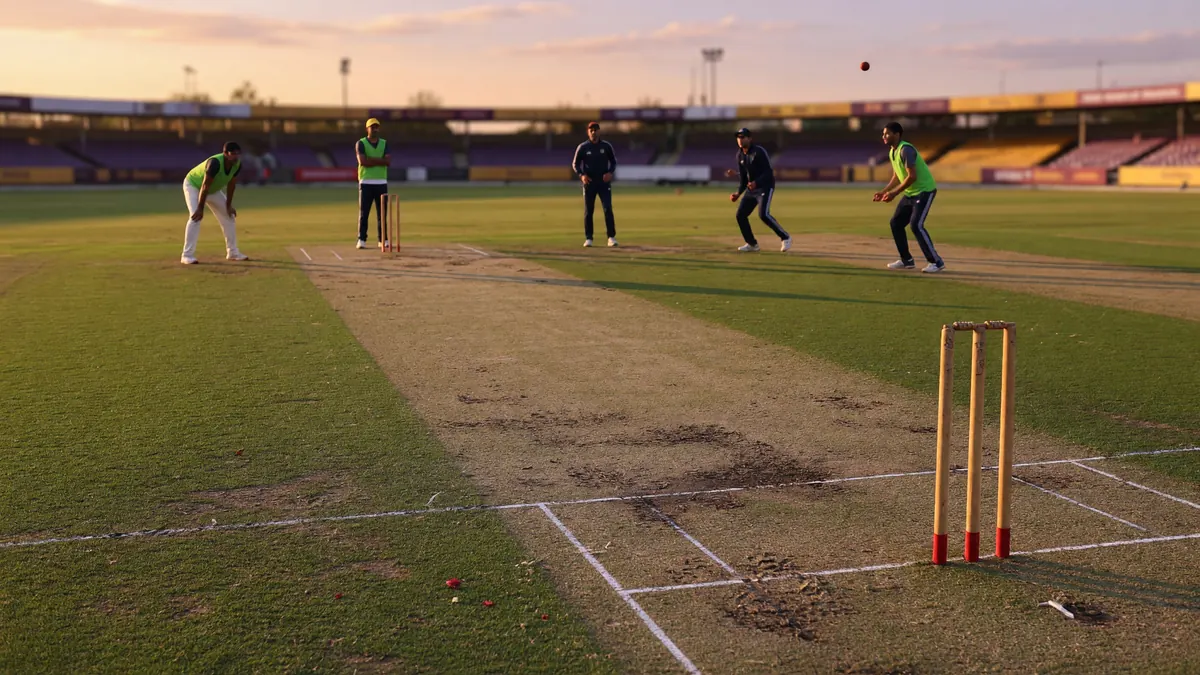
Salary-cap teams live or die on whether the pitch matches the roles you funded. A flat deck rewards ball-share batters and death hitters. A two-phase surface — early seam, later grip — rewards new-ball bowlers and middle-over controllers who also bat. Reading that difference before lock is more useful than memorising a dozen projected ownership percentages.
The desk uses a simple map: name the phases, name the roles that collect points in each phase, then spend salary in that order. Glossy predicted XIs still matter, but only after the surface tells you which columns of the eleven are actually expensive in fantasy terms.
Start with phases, not with favourites
T20 innings split cleanly enough for planning even when the ball behaves in shades of grey. Powerplay overs test the new ball and fielding restrictions. Middle overs test control, variations and the patience of set batters. Death overs test yorkers, wide lines, and batters who can still clear a packed off-side ring.
A pitch note that says pacers matter early and spinners gain later is telling you the points mass may sit in phase one and phase two more than in a pure death slog. A note that says true bounce and value for stroke-makers is telling you phase three batting can still carry a captain. You do not need a laboratory report. You need to know which phase is allowed to dominate your spend.
Early pace: what to fund and what to fade
When the new ball moves or bounces awkwardly, specialist opening batters without a second skill become fragile unless they are elite enough to survive the examination. Fantasy value shifts toward:
- seamers who take the first spell and can strike or dry the over;
- top-order batters who leave well and accelerate after ten balls rather than swinging at ball two;
- keepers who may collect edges if the cordon and gloves stay busy.
What often gets overfunded on those nights is the pure pinch-hitter selected only for intent. Intent without a plan against movement is a lottery ticket. Keep one upside launcher if the salary is truly cheap; do not build the spine around three of them.

Middle overs: the quiet salary war
Most casual tickets under-buy the middle. Broadcast stories love powerplay sixes and death yorkers. Points tables still pay for economy, wickets with soft hands, and batters who turn a start into a forty or sixty while the field spreads.
On surfaces that age into spin, the main spinner and the all-rounder who bowls those overs become core, not garnish. On surfaces that stay true for pace-off cutters, the seam-all-rounder who owns overs nine to fifteen can outscore a second death specialist who only sees two overs in a one-sided chase.
Batting roles in the middle prefer players selected at three to six with a licence to keep strike rotating and then expand. Number seven finishers still matter, but only after you have funded someone who will actually be there when the finish begins.
Death overs: fund the role, not the highlight reel
Death bowling is real fantasy value when the match stays alive into the nineteenth and twentieth overs. It shrinks when one side collapses and the chase becomes a jog. That is why death specialists are poor lone spines and good third bowlers behind a new-ball option and a middle-over controller.
Death batting is similar. A finisher who regularly faces eight balls at the end is a role. A finisher who often walks out with two balls left is a prayer. Check recent usage patterns and batting order before you pay top dollar for a highlight brand.
Two-phase grounds in one spend order
When the preview language points to early pace and later spin, a disciplined spend order looks like this:
- One new-ball seamer with a clear first spell.
- One middle-over bowler — spin or seam-all-round — with a full or near-full allocation.
- Two batters with top- or middle-order volume, including at least one who can survive early movement.
- One dual-path all-rounder who bats and bowls in the middle band.
- Then fill keepers, second seam, and finishers with whatever salary remains.
That order is a scaffold, not a law. If the confirmed sheet removes spin entirely, step two becomes a second seamer or a pace-off all-rounder. If the toss locks a side into a chase under heavy dew, second-innings batting floors rise and some spin equity falls. Adjust inside the scaffold; do not throw the scaffold away.
Chase lean and second-innings information
Previews sometimes say toss and pitch favour the side chasing. Treat that as a lean, not a prophecy. The fantasy implication is still useful: second-innings batters receive a target, which can steady middle-order decision making, while first-innings bowlers still own the new ball regardless of which innings comes first.
Build a ticket that survives either chase direction. That usually means keeping one new-ball option on each side or at least one reliable new-ball name plus a dual-path player whose bowling is not toss-dependent in the same way.
How to read a thin pitch note without inventing detail
Match previews vary in quality. Some name expected bounce, grass cover and average first-innings scores. Others offer a single sentence. When the note is thin, stay conservative:
- Prefer roles that pay on most T20 nights — top-order volume, new-ball wickets, one all-rounder.
- Avoid extreme stacks that only work if the surface is a road or a minefield.
- Wait for toss confirmations before locking death-only specialists as captains.
Inventing a detailed pitch story from a one-line preview is how tickets get clever and wrong. The desk would rather under-claim and adjust at lock than over-claim and force the eleven to fit a fantasy surface.
Connecting surface reading to the rest of the craft
Pitch phase is only one layer beside form, minutes, and salary math. The wider fantasy cricket notes cover points tables, format differences and captaincy structure in more depth. Use those pieces when you are building process; use the surface map when a specific ground note lands on your desk the day of the game.
A lock-time surface checklist
In the final half hour, run the surface questions in the same order every time so late XI news does not scramble your brain:
- Does the note still point to early pace, true batting, or grip for spin?
- Which confirmed bowlers own the new ball and the middle overs?
- Which confirmed batters own top-order volume versus finishing?
- Did the toss create a chase lean that lifts second-innings floors?
- Does your captain still sit on a route the surface actually pays?
If you can answer those five without hand-waving, the ticket is grounded. If you cannot, simplify toward high-floor roles and leave the exotic differentials for a night when the surface story is clearer.
Grass cover language without over-reading
Some previews mention grass cover, cracked tops or used surfaces from earlier matches at the same venue. Translate those phrases into role bias, not into false precision. Fresh grass often supports early seam and may shorten the life of pure stroke-play at the top. A dry, used surface often brings the ball onto the bat more slowly and invites variations earlier.
None of that replaces watching the first two overs once the match begins if you are in a contest that still allows late swaps — most public salary-cap locks do not. Pre-lock, the honest move is still a mild bias: fund a new-ball option when grass is mentioned, fund a middle-over controller when dryness and prior use are mentioned, and keep enough batting volume that you are not betting the whole ticket on one phase story.
Head-to-head history is background, not a surface
Historical ledgers between two sides tell you little about whether tonight’s ball will seam for four overs or skid on after the tenth. They are useful for broadcast context and almost useless for deciding whether your third bowler should be a wrist-spinner or a death specialist.
When a preview quotes a lopsided head-to-head beside a pitch sentence, keep them in separate mental buckets. The ledger might explain why ownership skews toward one nation’s batters. The pitch sentence still decides whether that skew is affordable. Funding five batters from the historical favourite on a grip-friendly middle-over night is how strong paper teams finish mid-table.
The same discipline applies to win-probability graphics. A 53–47 split is a modelling snapshot, not a command to stack one colour. Build elevens that still score if the underdog posts a defendable total or if the favourite chases in a hurry.
After the match: audit the phases
Post-match learning should track phases, not vibes. Write one line about which funded role actually touched the match’s decisive over. Note where wickets fell, which overs the spinners owned, whether finishers actually faced balls, and whether your funded roles touched those moments. Over a month of T20, that audit teaches you which ground notes were signal and which were noise — without turning every preview sentence into gospel.