
The first ball of a bilateral T20 series rarely arrives with a clean slate. India travel to Zimbabwe carrying a seven-match T20I losing streak after consecutive series setbacks against Ireland and England. Shreyas Iyer leads the side after recently replacing Suryakumar Yadav as captain. Zimbabwe, under Sikandar Raza, come in with a sharper split identity: a 2–1 ODI series win over Bangladesh, then a T20I series loss in the same window. Those two facts sit beside each other rather than cancelling each other out.
For Dream11 and similar salary-cap contests, that split matters more than a headline win probability. Streak narratives push casual entries toward “comeback” captains and away from home all-rounders who still bowl and bat in the middle overs. Home sides underdog-priced on reputation can still fill several high-floor roles. The useful work before lock is to separate confirmed context from predicted elevens, then build around roles the Harare surface is likely to reward.
What is confirmed before the toss
Match one of the T20I series is scheduled for 23 July 2026 at Harare Sports Club. Weather in the available preview is described as fine, with a full match expected and no rain interruption forecast. Head-to-head history cited for the fixture set stands at 14 completed T20Is: India 11, Zimbabwe 3. Historical dominance is background, not a selection rule for a single night in Harare.
The same preview frames toss and pitch as tilting toward the chasing side, and lists a rough win split of Zimbabwe 43% and India 53%. Treat those figures as the source’s modelling snapshot, not a desk forecast. Fantasy construction should still survive either result: a chase-friendly lean changes death-over bowling value and the weight on set batters in the second innings, but it does not hand automatic captaincy to either captain on colour of jersey alone.
Form pressure on India, mixed currency for Zimbabwe
India’s seven-match T20I slide is the loudest pre-match fact in the public conversation. Consecutive series defeats against Ireland and England leave the new leadership group needing an early stabilising night. In fantasy terms, that pressure cuts two ways. High-usage Indian batters can still clear ownership because the salary sheet prices them as defaults. They can also under-deliver if the top order loses early wickets on a surface that asks for a short period of assessment before expansion.
Zimbabwe’s recent story is less linear. Beating Bangladesh 2–1 in ODIs shows a side capable of winning complete matches at home. Losing the corresponding T20I series shows the shorter format remains harder to control. Raza’s captaincy is the through-line: he is the player most likely to appear in both the batting middle and a bowling allocation, which is exactly the dual-path structure salary-cap games reward when the pitch is not a pure pace highway.
None of that licenses inventing individual recent scores. Until the official sheets lock, the only safe use of form language is the series-level framing already on the record: India searching for a reset under Iyer; Zimbabwe trying to turn home conditions and Raza’s multi-phase involvement into an early series lead.
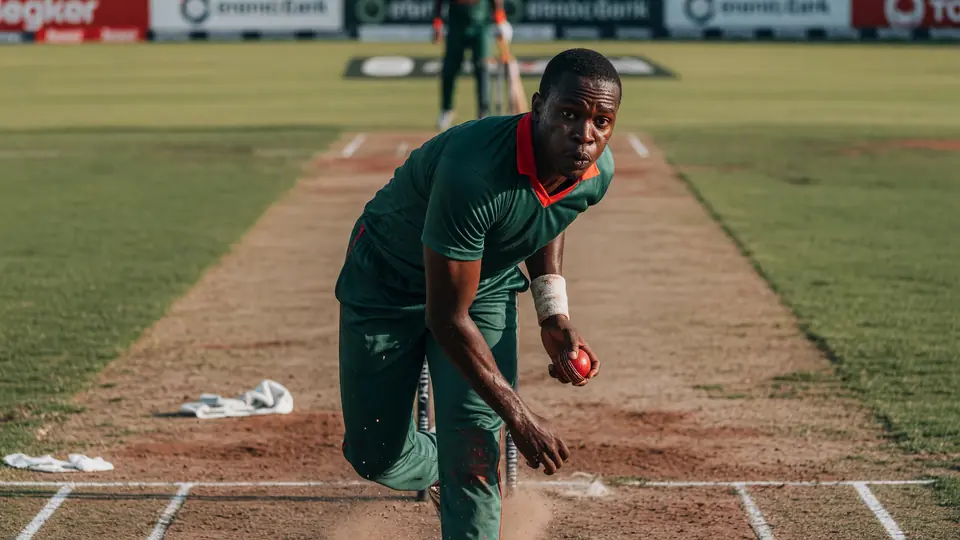
Harare Sports Club: two-phase pitch, not a single script
The pitch note attached to the fixture describes a genuine bat–ball contest rather than a pure road. Pacers are expected to matter in the powerplay; spinners gain as the ball ages. That is a classic two-phase T20 ground reading, and it should shape the order of your picks more than any single “must captain” name.
Early overs: seamers who bowl with the new ball can collect wickets or economy points before batters settle. If the first six overs stay honest, pure pinch-hitters without a secondary skill become fragile. Batters who can survive ten balls and then accelerate still clear the points floor more often than pure launchers who need a free hit every over.
Middle and late overs: spin and slower-ball overs become the control overs. All-rounders who bowl those overs while also batting in the middle order collect two routes to the same score. On a surface described this way, a Raza-type role and an Indian spin or seam-all-rounder role often beat a fourth specialist batter who only bats once.
Patient establishment is the batting theme in the preview: early big shots are harder; time at the crease pays. For fantasy that means you still want boundary options, but you want them attached to players who are selected to face volume, not only to face two overs of intent.
Predicted elevens — useful maps, not confirmed sheets
The CricTrends preview publishes predicted XIs. Until the boards confirm the toss sheets, treat every name below as a planning map. Availability notes in the same preview already flag Ashok Sharma and Mayank Yadav as players who may not feature, so they sit outside the core build.
| Zimbabwe (predicted) | India (predicted) |
|---|---|
| Brian Bennett | Vaibhav Sooryavanshi |
| Tadiwanashe Marumani | Abhishek Sharma |
| Dion Myers | Ishan Kishan |
| Sikandar Raza (c) | Shreyas Iyer (c) |
| Ryan Burl | Tilak Varma |
| Wessly Madhevere | Shivam Dube |
| Wellington Masakadza | Rinku Singh |
| Brad Evans | Harsh Dubey |
| Richard Ngarava | Prince Yadav |
| Blessing Muzarabani | Ravi Bishnoi |
| Newman Nyamhuri | Yash Thakur |
Reading those lists by role is more useful than reading them as two blocks of eleven equal names. Zimbabwe’s predicted spine pairs Marumani’s keeping role with Bennett at the top and Raza–Burl–Madhevere as the multi-skill band. India’s predicted spine pairs a left-hand heavy top (Sooryavanshi, Abhishek Sharma, Kishan) with Iyer’s captaincy middle, then Dube and Rinku as finishers, and a bowling mix of Dubey, Prince Yadav, Bishnoi and Thakur.
Building a Dream11 core around roles
A practical core drawn from the same preview — and rearranged here as a role stack rather than a branded team poster — looks like this:
- Wicketkeepers: Ishan Kishan; Tadiwanashe Marumani
- Batters: Brian Bennett; Shreyas Iyer; Abhishek Sharma
- All-rounders: Sikandar Raza; Ryan Burl; Shivam Dube
- Bowlers: Blessing Muzarabani; Prince Yadav; Harsh Dubey
That stack is a template, not a lock. The template’s logic is clearer than the names: two keepers with batting licence, three batters with top- or middle-order volume, three all-rounders who can touch both innings phases, and three bowlers tied to powerplay or middle-over overs. If the confirmed sheet drops one name, replace inside the same role instead of panicking into a pure stack of the favoured nation.
Salary-cap players who want a cleaner rule of thumb can steal the same discipline used across longer format explainers in our fantasy cricket notes: spend first on guaranteed overs or guaranteed batting order, then on upside. On a Harare night described as pace-early and spin-later, “guaranteed overs” often means the new-ball seamer and the main spin or seam-all-rounder who bowls middle overs, not the third death specialist who might only see two overs if the match breaks early.
Captain and vice-captain: two different theories
The preview’s highlighted captain pool is short: Sikandar Raza and Ishan Kishan. They represent different theories of the night.
Raza is the dual-path captain. If he bowls a full or near-full allocation and bats through a middle-order window, the multiplier attaches to two scoring engines. Home conditions and captaincy minutes raise his involvement ceiling. The risk is concentration: if Zimbabwe’s top order collapses and his bowling figures stay flat, the multiplier magnifies a quiet all-round card.
Kishan is the innings-shaping batter-keeper captain. Aggressive intent plus keeping involvement can stack batting milestones with fielding returns. He is the cleaner “India reset” captain for entries that want a single high-usage Indian scorer rather than a home all-rounder. The risk is powerplay dismissal on a surface that still offers early seam.
Vice-captain choices then fill the opposite theory. A Raza captain pairs naturally with an Indian volume batter (Kishan, Abhishek Sharma or Iyer) as VC. A Kishan captain pairs naturally with Raza or Dube as VC so the ticket still touches multi-skill overs. Iyer as captain is a third, more conservative reading: he is named captain of the side and sits in the middle order, but he lacks Raza’s bowling path and Kishan’s keeping path, so the multiplier is thinner unless he bats deep.
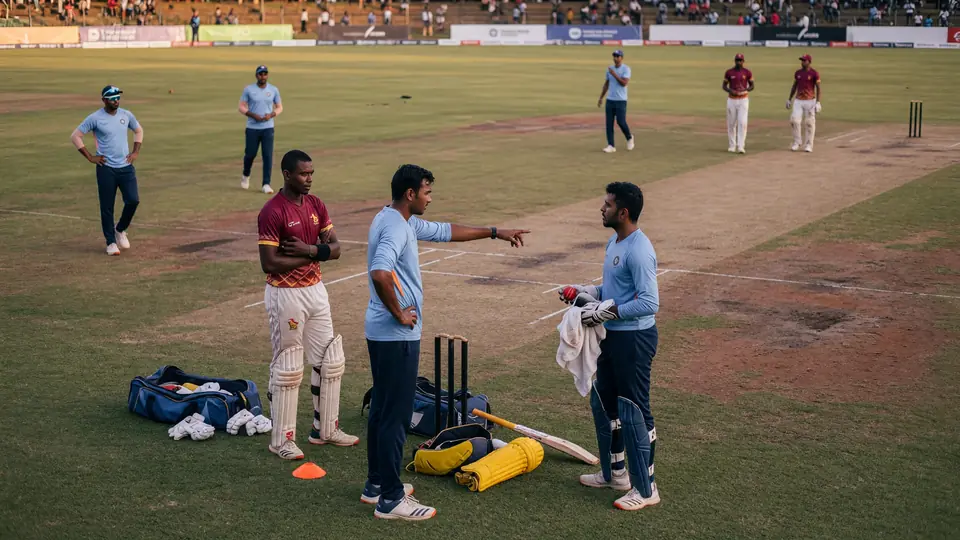
Bowling lanes that match the surface note
Blessing Muzarabani is the clearest Zimbabwe pace marker in the predicted attack: tall, new-ball capable, and useful if the powerplay offers bounce or seam. Richard Ngarava and Newman Nyamhuri sit behind him as left-arm or support pace options depending on final confirmation. Brad Evans and Wellington Masakadza extend the home bowling card into seam-all-round and spin lanes.
India’s predicted attack spreads differently. Prince Yadav and Yash Thakur cover pace; Harsh Dubey and Ravi Bishnoi cover spin and variations; Shivam Dube can add overs if the balance needs a fifth bowling option with batting insurance. On a pitch that ages toward spin, Dubey and Bishnoi are not afterthoughts — they are middle-over control pieces. On a pitch that stays true for pace, Muzarabani and the Indian new-ball pair climb.
The disciplined build rarely needs more than three pure bowlers if two all-rounders already bowl. Overflow cash is better spent protecting a second keeper or a third middle-order batter than on a fourth specialist who might bowl only at the death in a one-sided chase.
Names to leave out of the first draft
Ashok Sharma and Mayank Yadav are explicitly flagged in the preview as players who may not play or may sit outside selection. Do not spend salary defending either name before the sheet is official. Beyond those two, the quieter traps are projected substitutes and pure reputation stacks: filling five Indian batters because of the historical 11–3 T20I ledger, or avoiding every Zimbabwe bowler because India “should” chase 180 with ease. Historical ledgers do not bowl the first over in Harare.
Chase lean, second-innings roles and differential thinking
If the toss-and-pitch note is right and the night favours chasing, second-innings batters gain a slightly cleaner information set: they know the number. That can raise the floor for middle-order finishers such as Dube, Rinku Singh, Burl or Madhevere, depending on which side chases. First-innings bowlers who take the new ball still keep their path, because powerplay wickets do not care which innings comes first.
Differentials, if you need them, should still be role-true. A low-ownership Zimbabwe seamer confirmed for the powerplay is a cleaner differential than a batter floated at seven who might not face ten balls. A confirmed Indian spinner on a drying surface is cleaner than a third opener stacked only to mirror public teams. Ownership is not published here; the principle is the same regardless of the percentage board on your app.
A lock-time checklist
Work the last twenty minutes before lock in a fixed order so late team news does not scramble the whole ticket:
- Confirm both elevens against the predicted maps above; replace inside role.
- Note which seamers take the new ball and which spinners are named for middle overs.
- Re-check that Raza and at least one Indian multi-skill or volume batter still fit your salary after any forced swap.
- Only then lock captain and vice-captain, matching one dual-path theory and one volume-batter theory rather than two of the same.
- Leave Ashok Sharma and Mayank Yadav out unless a confirmed sheet suddenly includes them — and even then, demand a clear role.
What the night actually tests
Series openers expose process. India’s streak will dominate the broadcast story if early wickets fall; Zimbabwe’s home crowd will dominate it if Raza’s band through the middle overs. Fantasy scoring will follow the quieter mechanics: who bowled the moving ball, who batted long enough for the surface to ease, and who touched both innings with ball and bat. The 43–53 win split in the preview is a reminder that the match is not priced as a formality. Your eleven should not be priced as one either.
After the toss, the only new facts that should force a rebuild are a shock omission from the predicted spine — Raza, Kishan, Iyer, Muzarabani, Abhishek Sharma — or a bowling balance that removes spin entirely from one side. Cosmetic changes around the edges rarely beat a calm role-based ticket already built for Harare’s two-phase evening.