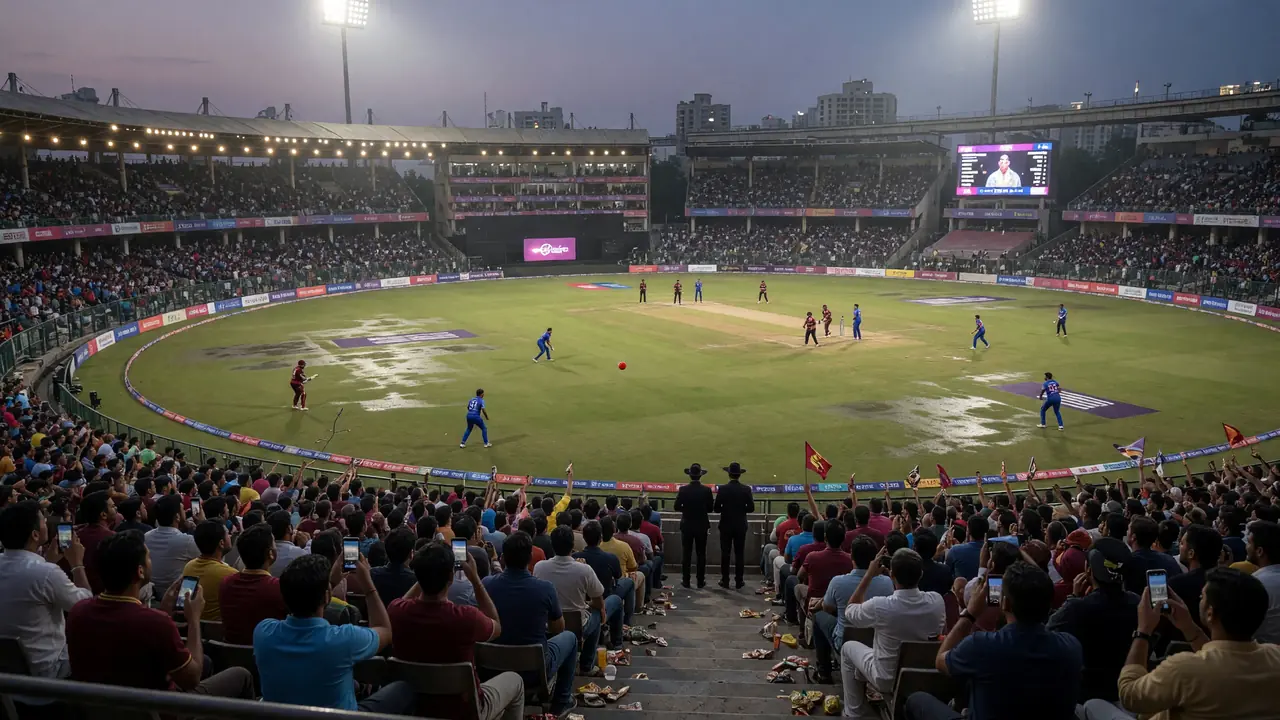
East Delhi Riders open their DPL 2026 account against a side they have already beaten three times in a row. South Delhi Superstarz arrive with the same explosive top order that carried them into last year’s playoffs, and with the same question that followed them out of the Eliminator: can the bowling hold when the batting does its job? The fixture is listed for Saturday, 1 August 2026, 1:30 PM IST at Arun Jaitley Stadium, Delhi, with FanCode carrying the live stream in India.
That combination — early-season stakes, a one-sided head-to-head, and a ground that rewards clean ball-striking — is why the contest has been one of the more watched previews of the opening weekend. The notes that follow stay inside the public form record from DPL 2025, the venue’s usual behaviour, and the named squad cores both sides have retained. Confirmed playing XIs were not available at the time of writing; anything that depends on a late omission is flagged as provisional.
How the sides finished DPL 2025
East Delhi Riders finished second in the league stage with six wins, then reached Qualifier 2 before West Delhi Lions ended their run. That is a top-half finish with a deep knockout appearance, not a fluke week. The batting spine was clear: Arpit Rana led the previous season’s run charts with 495 runs at an average of 55.00, and Anuj Rawat added 329. On the ball, Rounak Waghela took 11 wickets to lead the Riders’ attack, with Navdeep Saini contributing eight and a share of the on-field leadership. Mayank Rawat’s medium pace sat as a third seam option rather than a luxury.
South Delhi Superstarz finished fourth with four wins, three defeats and three abandoned matches, then lost the Eliminator to West Delhi Lions by seven wickets. The batting was the selling point. Anmol Sharma scored 351 runs at a strike rate above 154; Tejasvi Singh scored 339 at a strike rate near 190. Ayush Badoni’s presence in the published squad list keeps another middle-order accelerator available. Sumit Kumar led the bowling with 14 wickets and remains the named spearhead in the previews that have circulated around this fixture. Aman Bharti and Abhishek Khandelwal were listed as support options, with Digvesh Rathi and Himanshu Chauhan noted among the newer additions to the attack.
Read side by side, the 2025 table does not hand either side a free pass. East Delhi’s league-stage win count and Qualifier 2 run point to a more complete unit. South Delhi’s strike-rate pair can clear any total on a short-boundary afternoon, but the Eliminator exit against West Delhi Lions still sits on the record as a bowling and death-overs problem rather than a batting shortage.
Head-to-head and the early-season weight of three previous meetings
East Delhi Riders have won all three previous meetings against South Delhi Superstarz. In a short T20 league that is not a career sample, but it is a real psychological and tactical marker. Captains who have already lost three times to the same group tend to over-correct with fields or under-commit to their own plan; captains who have already won three times can fall into the reverse trap of assuming the fourth will look the same.
For East Delhi, the useful reading is not “we always win this” so much as “we already know which of their batters we cannot miss with the new ball.” Anmol Sharma’s powerplay aggression and Tejasvi Singh’s near-190 strike rate are the two names that force a plan before the toss, not after the fifth over. For South Delhi, the useful reading is the opposite: the head-to-head only changes if the bowling unit that leaked under pressure in 2025 holds a different length for twenty overs.
Neither side has a 2026 league result to lean on yet. That makes last season’s numbers louder than they would be in week four, and it makes the first six overs of this fixture more informative than any pre-match percentage. A clean powerplay from East Delhi’s top order would restate the hierarchy the head-to-head already implies. An early burst from Sumit Kumar would reopen a contest the record currently closes.
East Delhi Riders: balance first, then the Rana question
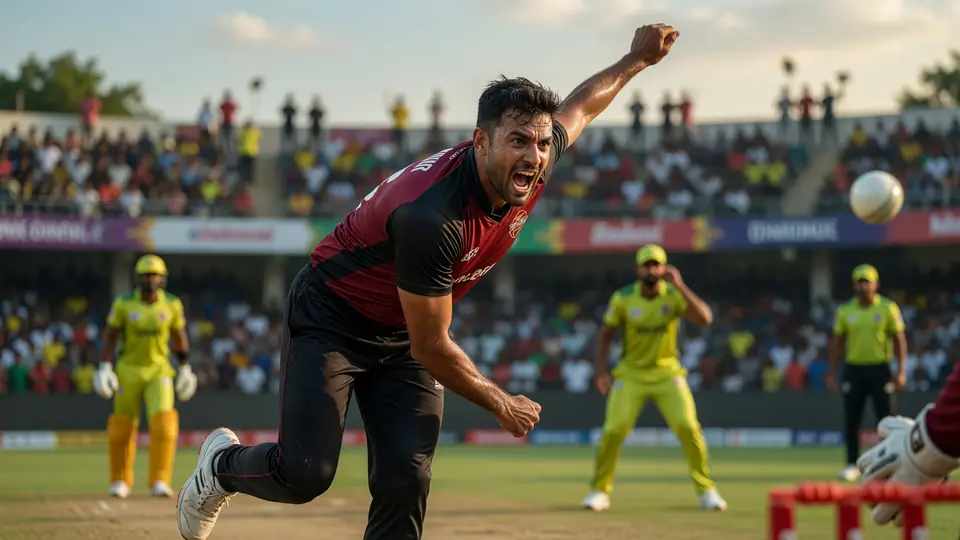
The Riders’ retained core — Arpit Rana, Navdeep Saini, Akhil Chaudhary and Mayank Rawat among the names repeatedly listed — is built around balance rather than a single gear. Rana’s 495 runs at 55.00 last season make him the load-bearing batter, and any reading of this fixture has to start with whether he gets a full innings or is forced into a recovery role. Anuj Rawat’s 329 runs give the top and middle order a second stable scorer; without that second scorer, Rana’s average becomes a dependency rather than a strength.
The bowling has enough variety to defend a par total on this ground if the lengths stay honest. Waghela’s 11 wickets last season mark him as the primary wicket-taking seam option; Saini’s eight wickets and experience matter more in the middle overs and at the death than in raw pace metrics. Mayank Rawat’s medium pace is the change-up that keeps the same batter from seeing one speed for four overs. The published squad also carries deeper pace depth — Simarjeet Singh and Mayank Yadav appear on the listed group — but confirmed XI status for this fixture was not public at the time of writing, so those names stay as available resources rather than locked selections.
Where East Delhi can still lose a game they are favoured to win is over-reliance on Rana’s start. If he falls early and the middle order is asked to rebuild on a surface that rewards intent, the Riders can drift into a 150-range total that South Delhi’s strikers will chase without much friction. The head-to-head history does not protect against that specific failure mode.
South Delhi Superstarz: strike rate on top, death overs still the test
South Delhi’s case for the afternoon is simple and loud. Anmol Sharma’s 351 runs above a 154 strike rate and Tejasvi Singh’s 339 near 190 give the Superstarz two batters who can decide a T20 inside the powerplay. Ayush Badoni’s name on the squad sheet adds a third accelerator if the top order only half-fires. On a ground with short square boundaries, that is enough batting to chase most first-innings scores that sit under 180.
The bowling case is thinner. Sumit Kumar’s 14 wickets last season are the clearest positive. Around him, the previews have pointed to Aman Bharti and Abhishek Khandelwal for support, plus Digvesh Rathi and Himanshu Chauhan as upgrades on last year’s depth. The open question is not whether South Delhi can take early wickets on a helpful afternoon; it is whether they can protect a total, or restrict a chase, once the ball is older and the field is spread. Last season’s Eliminator loss by seven wickets to West Delhi Lions is still the cleanest public evidence on that point.
If South Delhi are to overturn the three-nil head-to-head, the path runs through a disciplined new-ball spell at Rana and Rawat, not through outscoring East Delhi in a free-hitting contest. Their batting can win many DPL games on its own. This particular opponent has already shown, three times, that it can absorb that batting and still close the match.
Arun Jaitley Stadium: batting-friendly, short square, competitive around 170–180
Arun Jaitley Stadium has a long reputation as one of India’s higher-scoring T20 venues. True bounce, short square boundaries and a surface that lets batters play through the line from early in the innings are the usual ingredients. Public previews for this fixture have placed competitive totals in the 170–180 band, which matches how the ground has tended to play when the weather stays dry and the outfield is quick.
For seamers, the window is the new ball. Hit-the-deck lengths can still produce edges if the batter is reaching; once the ball softens and the field goes back, variations and yorkers matter more than raw pace. Finger spin can find a little grip as the match wears on, but this is not a surface that asks captains to stack three specialist spinners. The practical bowling plan on most Delhi T20 afternoons is two reliable seamers up front, a third seamer or seam-bowling all-rounder through the middle, and a spinner who can hold a length when the batters look to slog-sweep into the short square pocket.
For batters, the ground rewards intent without demanding slogging. A top order that rotates strike and takes the boundary options when the length is wrong will usually outpace a top order that waits for the perfect ball. That tilts the afternoon slightly toward East Delhi’s more stable scorers if the pitch plays as advertised, and toward South Delhi’s strikers if the seamers miss length early and the powerplay inflates.
Weather and broadcast for 1 August
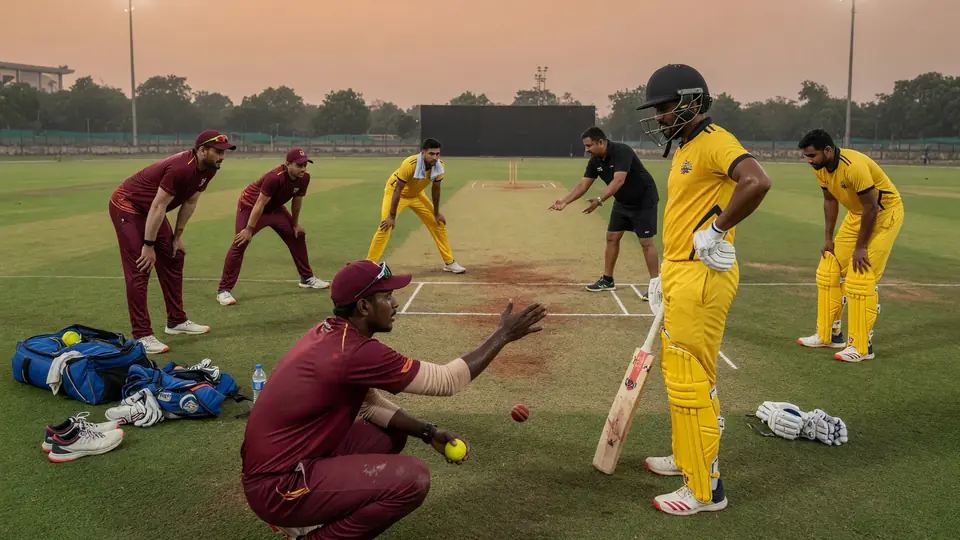
The forecast attached to the fixture has been warm and dry: around 33°C, sunny conditions, roughly a 5% chance of rain, humidity near 52%, and wind around 12 km/h. That profile removes rain breaks and heavy dew from the planning sheet. An afternoon start already reduces the classic night-game dew advantage for the side chasing; a dry, sunny day reduces it further. Captains still often prefer to chase at this venue for the simpler reason that a true pitch and a known target are easier to manage than a first-innings guess, but the weather itself is not forcing that choice.
FanCode is listed as the live stream for the match in India, through the app and the official site for subscribers. Ball-by-ball updates and scorecards are expected on the same platform. For readers following only the result, the useful checkpoints are the powerplay score, the 10-over mark, and whether the side batting second is ahead of a 170–180 par after 12 overs.
How the contest is being read — and what those numbers actually mean
Public previews ahead of the fixture have leaned East Delhi Riders, with one widely circulated split putting winning chances near 66% for the Riders and 34% for the Superstarz. The same previews have floated first-innings score bands of roughly 175–185 if East Delhi bat first and 145–160 if South Delhi bat first. Those figures are editorial estimates, not official market prices or confirmed simulations. They rest on the same inputs already listed here: East Delhi’s balance and head-to-head edge, South Delhi’s bowling consistency questions, and a batting-friendly venue.
Treat the percentages as a hierarchy, not a prophecy. A 66–34 lean says East Delhi start ahead on paper; it does not say South Delhi’s top three cannot clear 50 inside seven overs. Treat the score bands the same way. A 175–185 first-innings range for East Delhi assumes Rana or Rawat bats through a large share of the innings on a true surface. A 145–160 band for South Delhi assumes their batting is interrupted early or that East Delhi’s seamers hold a length. Either band can miss by thirty runs if the first four overs go wrong.
Toss lean in the same previews has favoured South Delhi Superstarz to win the toss and bowl, on the familiar Delhi logic that chasing is cleaner on a true pitch. Afternoon conditions weaken the dew argument, so the chase preference is more about information than moisture. If that toss call lands, East Delhi will be asked to set a total; the Riders’ batting depth is better suited to that job than South Delhi’s has been in recent knockout cricket, but it still requires a top-order platform.
Roles that decide the afternoon
Three roles sit above the rest. First, East Delhi’s new-ball plan against Anmol Sharma and Tejasvi Singh. Miss length to either and the powerplay can decide the chase before the middle order is needed. Second, South Delhi’s death bowling if they are defending, or their fifth-bowler overs if they are chasing a 170-plus total. Third, Arpit Rana’s first fifteen balls. A settled Rana drags the Riders into the score band the previews have already named; an early wicket forces the middle order onto a surface that punishes hesitation.
Secondary roles still matter. Rounak Waghela’s ability to take a middle-over wicket keeps South Delhi from building a single long partnership. Sumit Kumar’s first spell is the Superstarz’ best chance to create the early chaos their batting thrives in. Anuj Rawat’s presence as a second scorer decides whether East Delhi’s innings has a second gear after Rana. None of those roles require a miracle; they require the ordinary T20 discipline both sides already showed, in different proportions, across DPL 2025.
What to watch once the first ball is bowled
The cleanest live checklist is short. After six overs, check whether South Delhi’s strikers have been allowed a free hit or whether East Delhi’s seamers have forced a rebuild. After ten overs, check whether the side batting is on course for the 170–180 band the ground usually makes competitive. After fifteen overs, check death-over personnel: Waghela and Saini for the Riders, Kumar plus whoever holds the final overs for the Superstarz. Those three checkpoints will tell a clearer story than any pre-match percentage.
Readers who want the wider vocabulary behind this kind of fixture note — form sample sizes, pitch-behaviour checklists, weather impact and role reading — can carry the same method into other games through Come Sports’ match analysis desk notes. The method does not change because the franchise names are local; only the named players and the ground’s boundary lengths do.
For this specific Saturday afternoon, the verified floor is simple. East Delhi Riders hold the head-to-head, the stronger 2025 league-stage record, and the more complete bowling list on paper. South Delhi Superstarz hold the higher-ceiling batting pair and a spearhead in Sumit Kumar who can still open a contest in one spell. Arun Jaitley Stadium, on a dry 33°C afternoon with almost no rain risk, is unlikely to protect a timid total. The side that uses the first six overs with a clear plan — not the side that arrives with the better historical label — will write the result that the next preview has to explain.